Welborns and Related Families With Roots in North and South Carolina
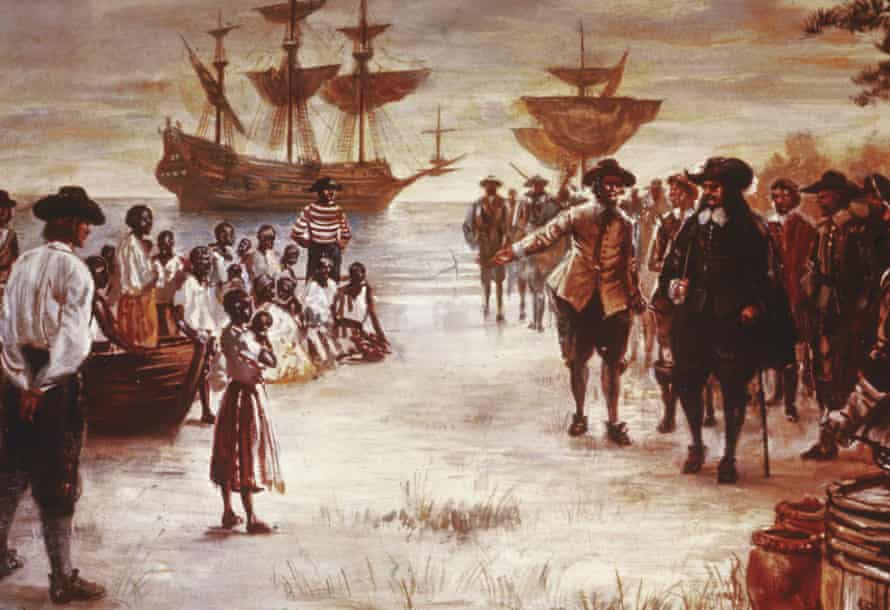
Many Americans' introduction to US history is the arrival of 102 passengers on the Mayflower in 1620. But a yr earlier, 20 enslaved Africans were brought to the British colonies confronting their volition.
As John Rolfe noted in a letter in 1619, "20 and odd negroes" were brought by a Dutch ship to the nascent British colonies, arriving at what is at present Fort Hampton, then Indicate Comfort, in Virginia. Though enslaved Africans had been part of Portuguese, Castilian, French and British history across the Americas since the 16th century, the captives who landed in Virginia were probably the kickoff slaves to go far into what would get the U.s. 150 years later.
4 hundred years on, the captives' inflow has informed nearly every major moment in American history, even if that history has been framed around anyone but Africans and African Americans.
"Historians, elected political figures [and] community leaders would prefer to sort of imagine the Usa as a kind of mythic, Anglo-Saxon Christian place," says Michael Guasco, an early American history professor at Davidson College.
In 1992, Toni Morrison told the Guardian: "In this land, American means white. Everybody else has to hyphenate."
1619
Later on the first captives were forced on to Virginia's shores past a Dutchman in 1619, the majority of the country remained white and relied mainly on the labor of Native American slaves and white European indentured servants. It was not until the end of the 17th century that the transatlantic slave trade made its impact on the American colonies.
1661
The showtime anti-miscegenation statute – prohibiting marriage betwixt races – was written into law in Maryland in 1661, before long after enslaved people were brought to the colonies. Past the 1960s, 21 states, nigh of them in the southward, still had those laws in identify. Alabama was the last country to repeal the ban on interracial matrimony, in 2000.
1776
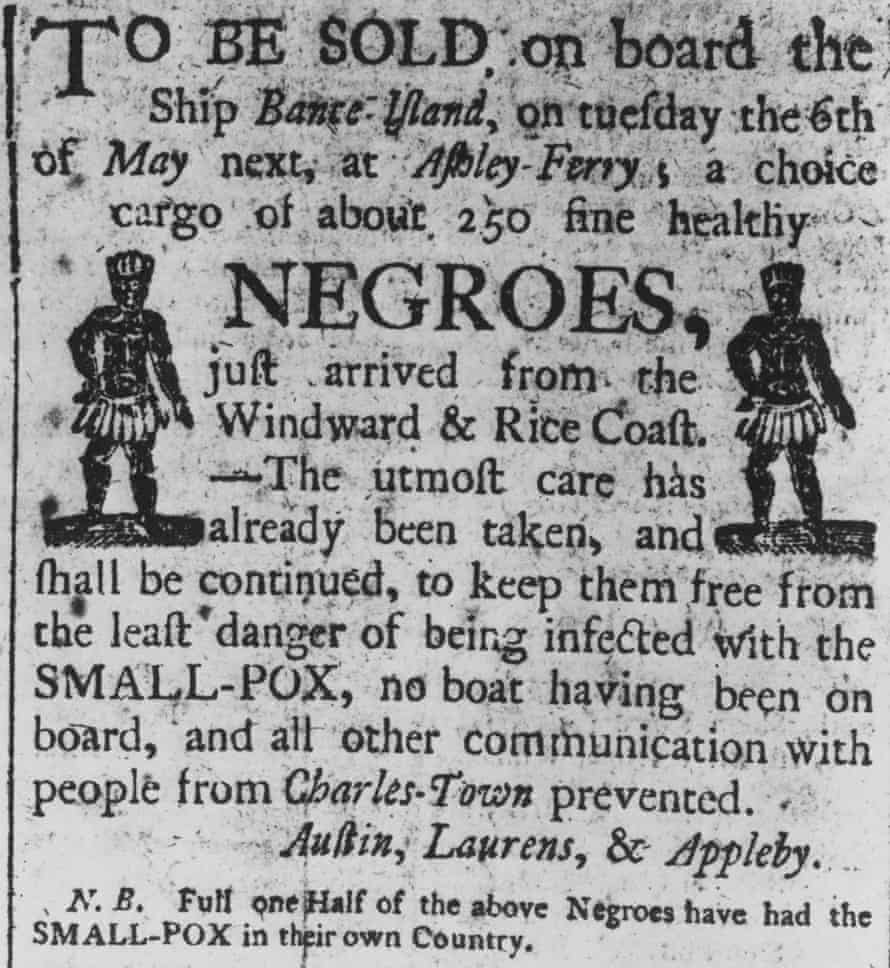
The Annunciation of Independence, which embraced in its offset lines "that all men are created equal, that they are endowed past their creator with certain unalienable rights", did non extend that right to slaves, Africans or African Americans, with the last version scrapping a reference to the denunciation of slavery. Thomas Jefferson, a slaveowner himself, penned those lines rejecting slavery; he removed the reference later on receiving criticism from a number of delegates who enslaved black people. This could represent "the fabric of the American political economic system" always since, some historians accept said.
Slavery flourished initially in the tobacco fields of Virginia, Maryland and North Carolina. In the tobacco-producing areas of those states, slaves constituted more than than 50% of the population by 1776. Slavery then spread to the rice plantations further south. In South Carolina, African Americans remained a majority into the 20th century, co-ordinate to census data.
1860
The British-operated slave trade across the Atlantic was one of the biggest businesses of the 18th century. Approximately 600,000 of 10 million African slaves fabricated their way into the American colonies earlier the slave trade – not slavery – was banned by Congress in 1808. By 1860, though, the US recorded nearly 4 million enslaved black people – thirteen% of the population – in the country equally the American-born population grew.
Eight of the first 12 U.s.a. presidents were slave owners. Proponents of slavery supported the efforts of groups like the American Colonization Society, who "sent back" tens of thousands of complimentary black people – most of them American-built-in – to Republic of liberia in the 19th century to forestall disruption caused by free descendants of slaves.
1865
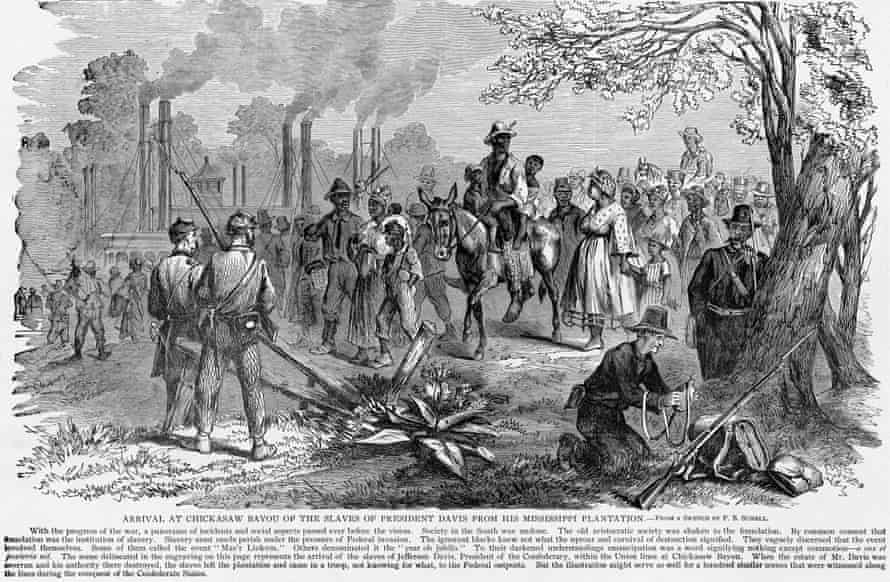
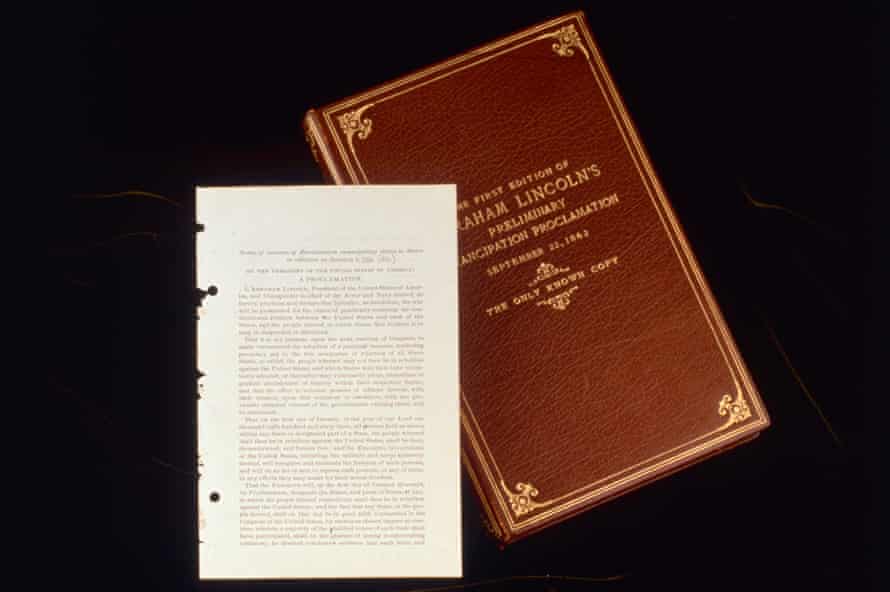
According to Abraham Lincoln, the civil war was fought to go along America whole, and not for the abolition of slavery – at to the lowest degree initially. Southern states said they wanted to secede to protect states' rights, merely they were really fighting to keep people enslaved. Lincoln took on the fight for the freedom of slaves, some historians have suggested, because he was worried the British would support the south in its self-alleged self-conclusion and recognize the south equally a split up entity. If he had made the war most ending slavery, information technology would take looked bad for the south's fight and the British supporting its crusade. Lincoln's death was probably the first casualty of "a long civil rights motility that is not all the same over", the historian Peter Kolchin has suggested.
1868
Some experts have argued that Reconstruction laid the foundation for "the organisation of new segregated institutions, white supremacist ideologies, legal rationalizations, extra-legal violence and everyday racial terror" – further widening the racial split up amidst blacks and whites. Others have pointed out that the end of the war left black Americans free but their status "undetermined", with the passing of "codes" to forestall black people from being truly free.
But somewhen, under the 14th amendment, African American men were granted the right to vote. Likewise, African Americans were extended birthright citizenship: that extends to descendants of freed black slaves and immigrants to present day.
1898
The recession of the late 19th century hit the US. Knight riders went out in the night, burning the homes of African Americans who bought their own land. They rode up to Washington to need change as southern white Democrats rolled back many of the albeit limited freedoms from Reconstruction simply a couple of decades before.
The Jim Crow era of segregation forbade African Americans from drinking from the same h2o fountains, eating at the same restaurants or attending the aforementioned schools as white Americans – all lasting until, and sometimes well past, the 1960s.
1926
As African Americans were shut out of jobs and opportunities during Jim Crow, and as more jobs became bachelor in the north and midwest, more than 2 million southern African Americans migrated after the kickoff globe war. Still, even hundreds of miles abroad from southern segregation, these migrating Americans were met by "sundown towns", where blackness people were not welcome after sunset, and by restrictions on where they could live in cities.
Oregon'due south constitution, for case, only removed its exclusionary clause, prohibiting blackness people to enter the state, in 1926.
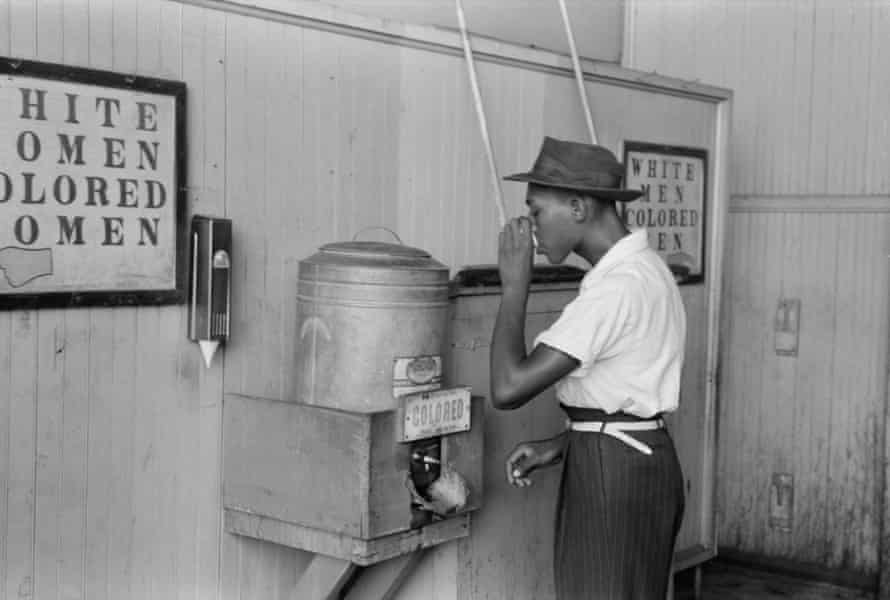
1954
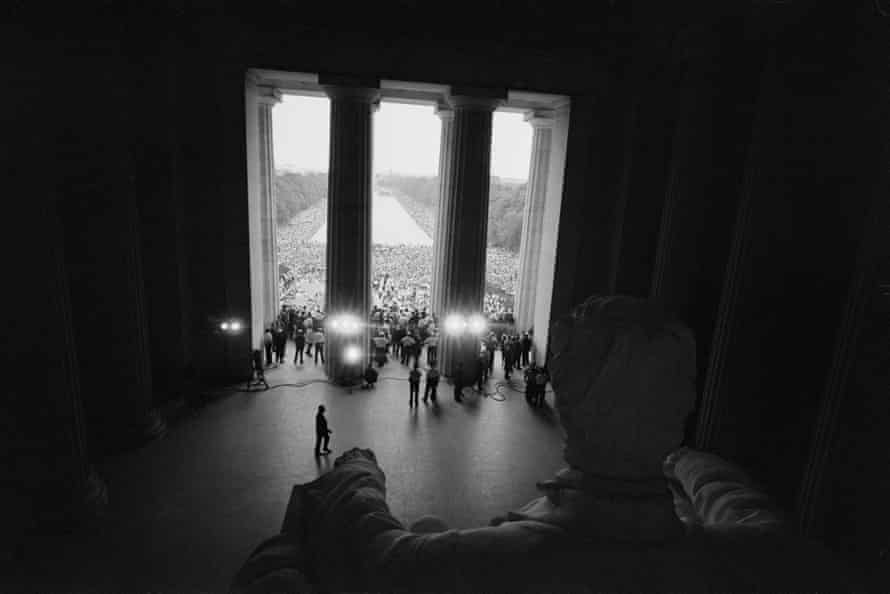
In the lead-up to the end of Jim Crow and the civil rights era, the fight continued. For example: only in 1948 did the Us military desegregate, past executive society. In 1954, in the Brownish v Lath of Didactics ruling, the supreme court ruled that segregation was unconstitutional and schools would have to integrate. Ceremonious rights leaders led anti-segregation marches across the land in the 1960s. In 1964, President Lyndon Johnson signed the Ceremonious Rights Act into law. Bussing African American children to white schools in white neighborhoods was deemed ramble.
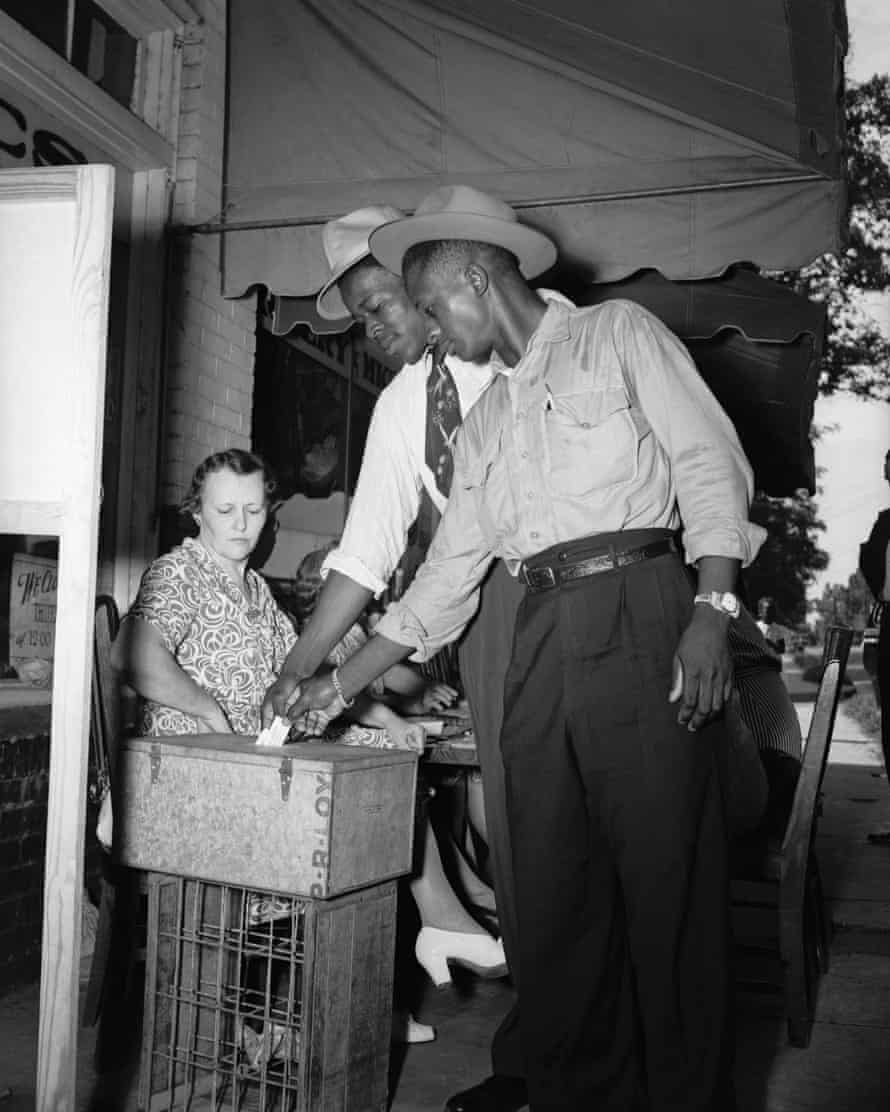
1965
"Slavery was gone but Jim Crow was live. Almost all southern African Americans were close out of the ballot box and the political power it could yield," wrote Edward Due east Baptist in The Half Has Never Been Told: Slavery and the Making of American Capitalism. The Voting Rights Human activity of 1965 attempted to correct this, prohibiting racial bigotry in voting and placing restrictions on a number of southern states if they tried to modify voting rights laws. Those restrictions were recently overturned in a 2013 supreme courtroom ruling.
Since the publication, in 2014, of The Case for Reparations, by Ta-Nehisi Coates, the subject field of how to settle the financial debts of 250 years of slavery has risen upwards the political agenda. Those arguing for a financial settlement to descendants of slaves say it is designed to address the racial inequality that withal lingers in the U.s..
A Pew report in 2017 showed that the median wealth of white households was $171,000 – 10 times that of black households ($17,100). The Democratic presidential hopeful Cory Booker has introduced a Senate beak on reparations and has been supported by Elizabeth Warren and Bernie Sanders.
Meanwhile, voter suppression, another legacy of slavery and its aftermath, is as well condign a more visible issue. Aggressive attempts by more often than not ex-Confederate states to limit the vote for poorer communities of color has become more pronounced since the gutting of the Voting Rights Deed in 2013.
As Carole Anderson, bookish and the author of Ane Person, No Vote wrote in the Guardian final calendar week, about the 33 million Americans who have been purged from the voter rolls since 2014: "Non surprisingly, these massive removals are full-bodied in precincts that tend to take higher minority populations and vote Autonomous."
-
This article drew on a number of books about the American history of slavery, including The Half Has Never Been Told: Slavery and the Making of American Capitalism by Edward E Baptist; American Slavery, 1619-1877 past Peter Kolchin; and Black Is a Country: Race and the Unfinished Struggle for Republic by Nikil Pal Singh. It as well used census data bachelor online at census.gov.
-
This article was amended on 24 June 2021. A Pew written report in 2017 showed that the median wealth of white households was $171,000, rather than the median income as an earlier version said. It was farther amended on 25 Feb 2022 to add the 1860 enslaved population in Delaware and to reflect the correct Virginia borders in that year.
Source: https://www.theguardian.com/news/2019/aug/15/400-years-since-slavery-timeline
0 Response to "Welborns and Related Families With Roots in North and South Carolina"
Post a Comment